
It isn't Rajan ignoring money as much as it is Bernanke ignoring capital and exchange rates.

The large current account deficit and the growing vulnerability on the external front have largely contributed towards the secular decline and the current volatility of the rupee.
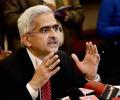
Reserve Bank Governor Shaktikanta Das on Monday said despite the latest headwinds arising from the Jackson Hole summit leading to extreme volatility, our banking system and financial markets are strong enough to withstand such pressures. Taking the markets by surprise, US Fed chair Jerome Powell had told the annual Jackson Hole summit of central bankers and economists last week that he would have to keep raising federal fund rates to tame inflation, which remains the biggest challenge to the world's largest economy. He also warned of the pains that such monetary policy actions would create on growth and jobs.

In worldwide trade, the US dollar continued its highly bullish trend against all major emerging market currencies

The Urjit Patel committee on monetary policy framework has proposed setting up of a monetary policy committee (MPC) that will be headed by the Reserve Bank of India (RBI) governor and accountable for achieving inflation target set by it.


Rajan also said the outlook for agriculture is subdued, in view of both rabi and kharif prospects being hit by monsoon vagaries.

Between April 2 and July 8 this fiscal, the rupee has plummeted by 12.81 per cent, and hit all-time low of 61.21 per cent on Monday.

The country's foreign exchange reserves surged by $58.38 billion in April-September 2021 to $635.36 billion, says an RBI report released on Wednesday. The forex reserves were at $576.98 billion at end-March 2021. The Reserve Bank of India (RBI) publishes half-yearly reports on management of foreign exchange reserves.

Although such alerts are not compulsory for the banks, this may become the norm now if payments are missed even for a day.

'It is building the country's infrastructure, and delivering it very efficiently.'

Dollar's strength against other currencies overseas capped the rupee's gain

The Reserve Bank of India has issued several warnings that the public should not fall prey to such unscrupulous activities and verify the companies offering loans online and through apps.

While far from being a currency war, India does not have much of an option but to depreciate to accommodate its exports at a time when China shows its intent to let its currency depreciate.

The domestic currency spurted by 425 paise or 6.28 per cent in last five straight sessions.
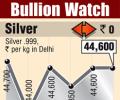
However, FII outflows of Rs 545 crore (Rs 5.45 billion) capped the gains in the rupee, which had slumped by 126 paise in past two days.

The sudden movement of the rupee - post the monetary policy - is not a reason to panic, said currency dealers. According to them, a correction was overdue for the rupee that remained the best performing currency in the region for well over a month. The rupee closed at 74.72 a dollar on Friday from its previous close of 74.60. It had dropped 1.52 per cent against the dollar on April 7 after the Reserve Bank of India (RBI) announced its monetary policy, committing to buy Rs 1 trillion of bonds in the June quarter. A weak rupee goes well with the export narrative of the government, and is consistent with the RBI's intervention strategy that prevented an appreciation.

'There are some high-frequency indicators where uptick is visible and some where it is not'

Frantic dollar demand from corporates along with an aggressive hedging strategy adopted by importers in the wake of the currency volatility predominately took a toll on the domestic unit despite moves by the central bank to stabilise the currency.
Broking firm Jefferies says Indian financial system is now flooded with the kind of liquidity witnessed in 2005-07 and 2009-10

The RBI fixed the reference rate for the dollar at 65.2525 and for the euro at 72.1954.

A bench comprising Chief Justice Uday Umesh Lalit and Justice Bela M Trivedi said it was sitting in a combination of two and according to a reference order on the matter, it should go before a bench of three judges for disposal.

A month-long national lockdown to arrest the spread of COVID 2.0 could shave off 100-200 bps of GDP, leading to a 300 bps risk to annual growth, a brokerage report has flagged while expressing doubts over the ability of local lockdowns to control the pandemic. The second wave of the coronavirus inflection has caught the government off-guard with the daily cases jumping over 6.5 times in the past 30 days. With close to 3.53 lakh fresh daily infections, the country is the worst hit globally.
The mobile banking app of the largest private sector lender HDFC Bank, which has been under the regulatory lens for network outages, was down for an hour on Tuesday due to unspecified issues. The city headquartered bank said the issues were faced for an hour late in the morning on Tuesday and the same was resolved in an hour. It urged customers to use the net banking alternative to transact in the interim.
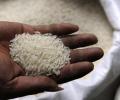
A 6-7 million tonnes shortfall in rice production due to a fall in paddy sowing area is likely to keep rice prices at elevated levels, adding to the inflationary pressure that the slowing economy is already grappling with. Elevated food prices, including that of cereals, had led to retail inflation reversing a three-month declining trend, to touch 7 per cent in August. Similarly, the wholesale price inflation, which declined to 11-month low, also showed price pressures from cereals resulting from wheat output being impacted by severe heat waves in some parts of the country.
The currency market won't care for our moans, groans, cries and sighs. The rupee will find its own level, explains Tamal Bandyopadhyay.

Brokerage firm CLSA says in its interactions with government officials, measures such as the dollar-deposit scheme were under consideration.
According to dealers, the one-way appreciation was halted by huge purchase of dollars by the RBI which pushed down the spot rupee to 39.90 to a dollar .
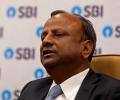
According to him, the rural economy will play a critical role in the revival process.
The rupee has been under immense pressure due to a host of reasons including soaring crude oil prices, sustained foreign fund outflows and widening current account deficit.

The stubbornly high global crude oil prices are opening up a can of worms to heightened inflation risks and likely to disrupt government's fiscal maths along with deteriorating global financial conditions.

In 2009, the UPA government, had announced a slew of measures to boost liquidity in NBFCs. These included a scheme for providing liquidity support to NBFCs having assets size of over Rs 100 crore through a SPV.

Expressing disappointment over the contraction in industrial growth in October, India Inc has appealed to the Reserve Bank to cut interest rates to revive the manufacturing sector and ameliorate investments.

What the reserves offer for now is improved import coverage of about 13 months, almost double the 2013 level of less than seven months. And, ammunition to arrest a rapid rupee slide, says Anup Roy.

Economic growth has slipped to a six-year low of 5 per cent for the June quarter and is expected to turn in lower than that in the September quarter. Lack of consumption is seen as one of the key factors pulling down growth.

'Any normalisation exercise will bring its share of volatility.'

Anup Roy and Krishna Kant on the challenges the public sector banks face in revitalising themselves
.jpg)
Fag-end dollar selling by exporters helped the rupee to recover lost ground and settle at the day's high of 60.77, a gain of 11 paise. The rupee earlier touched an intra-day low of 61.21 on July 8.

Headline inflation will come down under the 6 per cent mark in July itself but will stay at an elevated level of over 5 per cent for some time, Chief Economic Advisor K V Subramanian said on Thursday. Such an outcome will get the price rise back into the upper-end of the target band given to RBI, he said, adding that consumer price inflation had breached the mark for three consecutive quarters last fiscal because of supply side issues like challenges in movement of goods. "With reasonable probability, I expect this month the (inflation) print to come less than 6 per cent," Subramanian told a conference organised by industry lobby Ficci. Right after data for May showing inflation at 6.4 per cent had come out, Subramanian said he had predicted it will cool down in internal meetings and also during "deliberations with the regulator".

Although the RBI's open market operations have ensured sufficient system-level liquidity, some sectors are finding liquidity to be a challenge owing to their credit profile.
